
Cabinet Refacing vs. Replacement in Charlotte, NC: Which Is Better for Your Project?
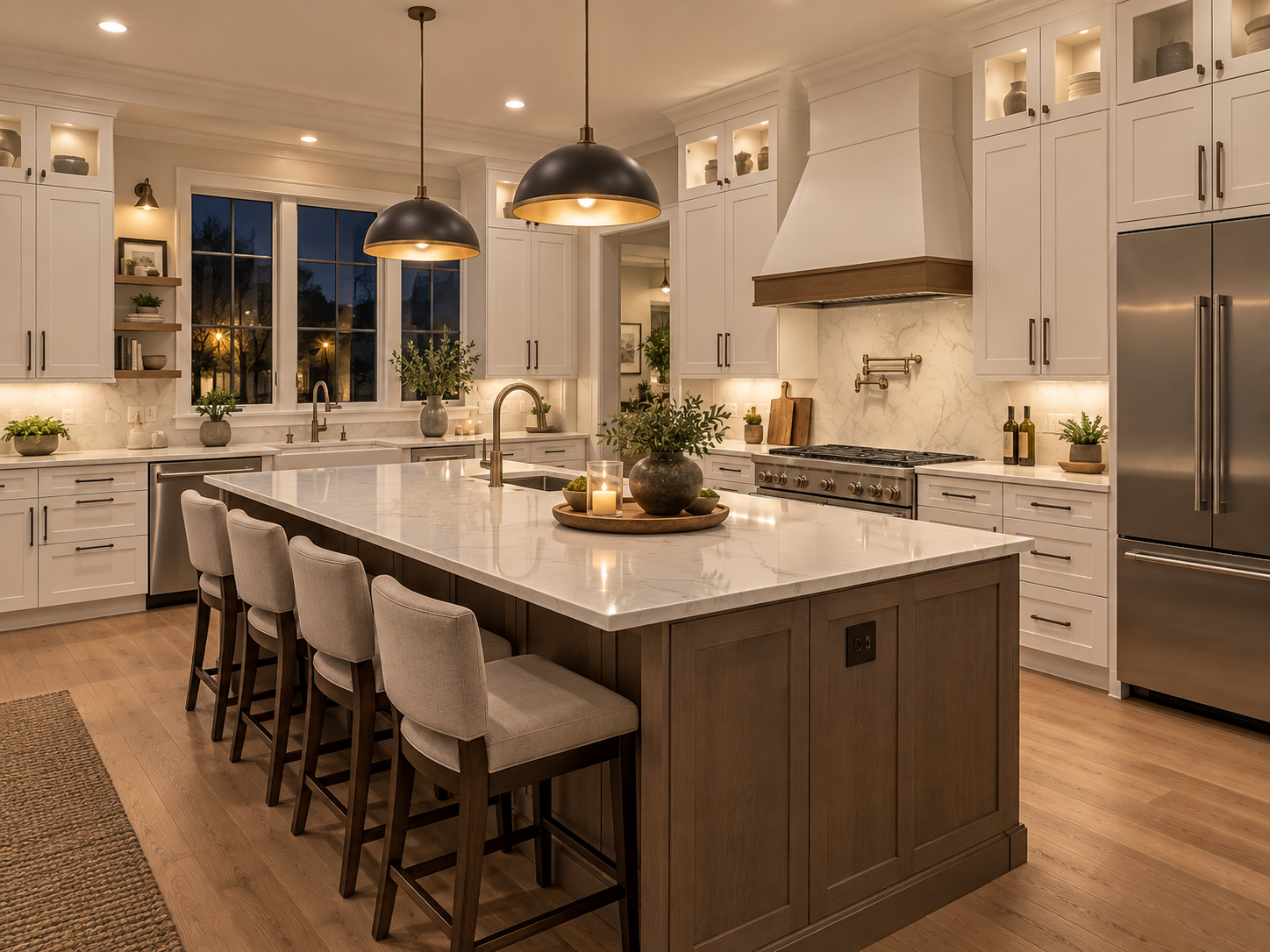
Searches for cabinet refacing in Charlotte, NC have grown sharply, and the reason is easy to understand. Many kitchen projects do not begin with a blank slate. They begin with existing cabinets that may look dated but are still attached to the wall, and the project team has to decide whether to keep the boxes, reface the visible surfaces, refinish what is already there, or remove the cabinets and install a new layout.
For contractors, remodelers, designers, property investors and other trade professionals, that decision affects far more than appearance. It influences labor, scheduling, appliance placement, countertop work, storage capacity, layout flexibility and the number of unknowns that may appear once work begins.
L&C Cabinetry does not provide cabinet refacing services. We supply new cabinetry to qualified trade professionals. This guide is designed to help Charlotte-area project teams evaluate the difference between refacing and replacement so they can choose the approach that best fits the condition of the existing kitchen, the scope of the remodel and the end user's goals.
What Is Cabinet Refacing?
Cabinet refacing keeps most of the existing cabinet boxes in place while changing the visible exterior surfaces. Depending on the contractor and system used, the project may include new doors and drawer fronts, veneer or finished panels applied to exposed cabinet faces, new edge treatments, new hinges, and new hardware.
The attraction is straightforward: if the cabinet boxes are sound and the kitchen layout already works, refacing can change the appearance of the room without rebuilding the entire cabinet plan.
That does not mean refacing is automatically the simpler choice. The existing boxes still have to be worth keeping. Door openings, face frames, end panels, toe kicks and visible surfaces have to accept the new treatment cleanly. Existing cabinet dimensions also remain unchanged, which means a project that needs a wider refrigerator opening, more drawers, a larger pantry or a different island configuration may quickly move beyond what refacing can accomplish.
What Does Full Cabinet Replacement Change?
Cabinet replacement removes the existing cabinet system and creates an opportunity to redesign the storage plan. The project can still preserve the same general footprint, but new cabinetry gives the designer and contractor the ability to reconsider cabinet widths, drawer stacks, pantry storage, wall cabinet heights, corner solutions, appliance clearances, island dimensions and decorative details.
Replacement also allows the team to start with a known cabinet specification rather than adapting new doors and finishes to boxes of uncertain age or condition.
For many Charlotte kitchen renovations, the real question is therefore not simply, “Which option looks newer?” It is, “Do we want to preserve the existing cabinet system, or do we need the new kitchen to function differently?”
Cabinet Refacing vs. Replacement: Quick Comparison
| Factor | Refacing | Replacement |
|---|---|---|
| Existing boxes | Usually retained | Removed and replaced |
| Layout flexibility | Limited | High |
| Appliance-opening changes | Limited | Can be redesigned |
| Storage redesign | Limited | Can be reconfigured |
| Cosmetic change | Strong | Strong plus functional change |
| Best fit | Sound boxes + good layout | Layout, storage or condition changes |
When Cabinet Refacing Can Make Sense
Refacing may be worth considering when the existing boxes are structurally sound, the layout already works, the cabinet interiors are in acceptable condition and the project is primarily cosmetic.
It can be especially relevant when the client wants a new door style or color but does not want to relocate plumbing, appliances or major cabinet runs. A straightforward perimeter kitchen with good storage and properly sized appliance openings may not need a complete redesign simply because the door style feels dated.
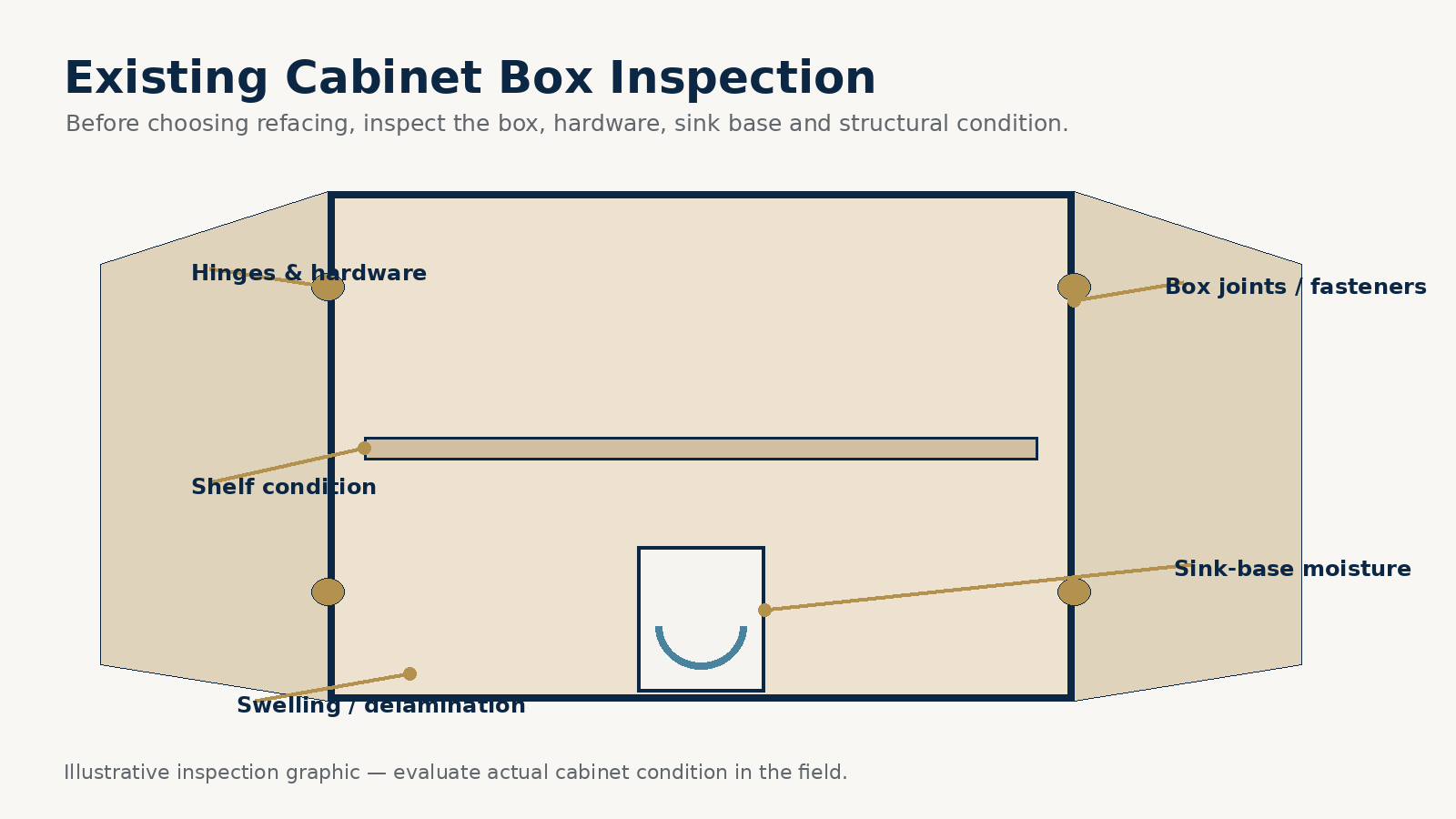
Before recommending refacing, however, the project team should inspect more than the doors. Look for water damage under sinks, swelling, loose joints, sagging shelves, failing drawer hardware, damaged cabinet bottoms, worn interiors and previous repairs. If the boxes are not a strong foundation, investing in a new exterior does not solve the underlying problem.
When Replacement Is the Stronger Choice

Replacement becomes more compelling when the remodel is intended to improve function as well as appearance.
1. The kitchen layout needs to change.
If a wall is being opened, an island is being added, a peninsula is being removed or the work zones are being reorganized, existing cabinets can become a design constraint. New cabinetry allows the plan to follow the new room rather than forcing the new room to follow the old cabinets.
2. Appliance sizes are changing.
Modern refrigerators, ranges, wall ovens, microwaves and specialty appliances can have very different clearance requirements than the products they replace. If the existing openings are wrong, refacing will not solve the dimensional problem.
3. Storage is a major complaint.
A kitchen can have plenty of cabinet boxes and still store poorly. Wide doors with fixed shelves, limited drawers, undersized pantry space and awkward corners can make a large kitchen feel inefficient. Replacement gives the project team an opportunity to allocate storage around how the room will actually be used.
4. The boxes show moisture or structural damage.
A new exterior should not be used to hide a cabinet box that has lost strength. Damage around sinks, dishwashers, plumbing penetrations and frequently wet areas should be evaluated before any cosmetic work is approved.
5. The project needs repeatable specifications.
For investors, property managers, builders and remodelers working across multiple units, standardized new cabinet packages can simplify estimating, purchasing, installation and future replacement parts. Refacing varies with the condition and dimensions of what is already in each unit, which can make portfolio work less predictable.
6. The client expects a visibly different kitchen.
Changing door fronts can refresh the room, but it will not create taller wall cabinets, a different island, new pantry towers, improved drawer storage or a revised appliance layout. When the design brief calls for a true transformation, replacement usually gives the project team more tools.
Refacing, Refinishing and Painting Are Not the Same Thing
These terms are often used interchangeably, but they describe different levels of work.
Refacing generally changes the visible cabinet fronts with new doors, drawer fronts and finished exterior surfaces. Refinishing usually means stripping, sanding or otherwise preparing existing wood surfaces and applying a new finish. Painting changes the surface color but typically keeps the existing doors, drawer fronts and cabinet structure.
That distinction matters because the search for “cabinet refacing Charlotte” may include people considering several different cosmetic options. A contractor should define the proposed scope precisely so the client understands which components remain and which components are replaced.
Evaluate the Total Project, Not One Line Item
Comparing only the cabinet quote can create a misleading decision.
A refacing project may preserve countertops, plumbing and some existing materials, but it can also require specialized surface preparation, custom fitting around irregular existing boxes and labor to correct years of wear. A replacement project may cost more in cabinetry and demolition, but it can eliminate compromises that would otherwise remain in the finished room.
For trade professionals, the better comparison is total project value: labor, cabinet materials, countertop implications, appliance changes, plumbing and electrical work, schedule risk, expected service life, storage improvement and the level of finish the client expects.
There is no universal winner. The right answer depends on what the project is actually trying to accomplish.
Measure the Existing Kitchen Before Choosing
Even when the team is still deciding between refacing and replacement, field measurements should begin early.
Record wall lengths, ceiling height, window and door locations, appliance openings, plumbing, electrical locations, soffits, vents, columns and any irregular walls. Measure the existing cabinet runs, but do not assume the new layout has to copy them.
If replacement becomes the preferred path, accurate measurements allow the cabinet plan to be developed without losing time later. L&C's Charlotte measuring guide explains the dimensions and obstructions contractors should verify before a cabinet order is finalized.
If Refacing Is Chosen, Inspect the Cabinet Boxes Carefully
A visual inspection should answer several questions before money is committed to new fronts:
Are the cabinet boxes square enough for new doors and hardware? Are the shelves and bottoms still rigid? Are the sink-base and dishwasher-adjacent cabinets free from significant water damage? Do the drawers operate properly? Are the interiors acceptable to the client? Are the cabinet dimensions compatible with the appliances that will remain? Are exposed sides and toe kicks suitable for the proposed finish treatment?
If several of those answers create concern, replacement may provide a cleaner project path.
If Replacement Is Chosen, Lock the Functional Decisions First
Do not begin with color.
Start with the room plan and the items that control cabinet dimensions: refrigerator width and door swing, range or cooktop configuration, dishwasher location, sink size, microwave or wall oven requirements, pantry goals, island seating, traffic clearances and storage priorities.
Once those decisions are established, the project team can select cabinet style, finish, molding, decorative panels and hardware with much greater confidence.
How Contractors Can Reduce Change Orders on a Replacement Project
Cabinet replacement is most predictable when the order is treated as a coordinated construction package rather than a collection of cabinet boxes.
Before approval, verify the final field dimensions against the cabinet drawing. Confirm appliance specifications. Identify finished ends, fillers, panels, toe kick, crown or light rail, island backs, refrigerator panels and specialty accessories. Label rooms or units consistently on plans and purchase documents. Establish who is responsible for receiving, inspecting and reporting shortages or damage.
For multi-unit work, create repeatable packages whenever possible. A verified Plan A, Plan B and Plan C can be easier to estimate, order and install than recreating every kitchen individually.
A Charlotte Decision Checklist
Choose refacing when the boxes are sound, the layout works, appliance openings do not need meaningful changes, storage is adequate and the project goal is primarily cosmetic.
Consider full replacement when the layout is changing, storage needs improvement, cabinet boxes are damaged, appliance sizes are changing, the client wants a substantially different kitchen, or the project benefits from a standardized new cabinet specification.
For borderline projects, price and schedule both approaches against the same final design goals. The least expensive initial scope is not always the least expensive way to achieve the result the client is expecting.
Work With L&C Cabinetry in Charlotte When Replacement Is the Right Fit
L&C Cabinetry serves qualified trade professionals from our Charlotte location at 2908 Stewart Creek Blvd, Charlotte, NC 28216. We supply cabinetry for kitchen renovations, new construction, investment properties, multi-unit projects and other professional building work.
If your Charlotte cabinet refacing evaluation points toward replacement, bring verified measurements, appliance specifications, layout goals, quantities and project timing to the L&C team. A clear project package makes it easier to evaluate cabinet options and move toward an accurate order.
Frequently Asked Questions
Is cabinet refacing the same as cabinet refinishing?
No. Refacing usually replaces doors and drawer fronts and applies new finished surfaces to visible cabinet areas. Refinishing usually restores or changes the finish on existing wood components. Painting is another separate process that generally keeps the existing doors and boxes.
Is cabinet refacing cheaper than replacing cabinets?
It can be, particularly when the existing boxes are sound and the layout does not need to change. The better comparison is the total project scope, including labor, surface preparation, countertop implications, appliance changes and any repairs required to the existing cabinets.
When should kitchen cabinets be replaced instead of refaced?
Replacement is often worth considering when cabinet boxes are damaged, the kitchen layout needs to change, appliance openings are incorrect, storage is poor, or the client expects a substantially different configuration.
Can old cabinet boxes be refaced?
Age alone does not determine whether a box can be refaced. The condition, construction, alignment and interior quality matter more. Existing cabinets should be inspected before new doors or exterior finishes are ordered.
Where can contractors source new cabinets in Charlotte, NC?
L&C Cabinetry supplies wholesale cabinetry to qualified trade professionals from its Charlotte location. Contractors should bring field measurements, appliance specifications, project quantities and timing when discussing a replacement cabinet order.
Bathroom Vanities in Charlotte, NC: A Sizing, Layout & Ordering Guide
Bathroom cabinetry is a relatively small part of a floor plan, but it can create outsized problems when the dimensions, plumbing, storage plan and finish…
Read article
How to Measure for Kitchen Cabinets: A Charlotte Contractor's Guide
When a kitchen cabinet order goes wrong, the problem often starts long before the cabinets arrive at the jobsite.
Read article
Wholesale Kitchen Cabinets in Charlotte, NC: A Practical Guide for Contractors, Builders, and Designers
For construction professionals, cabinetry is more than a finish selection. It affects the project schedule, installation sequence, budget, punch list, and the client's final…
Read article