
Kitchen Cabinets in Richmond, VA: Choosing a Finish Around Existing Wood Trim
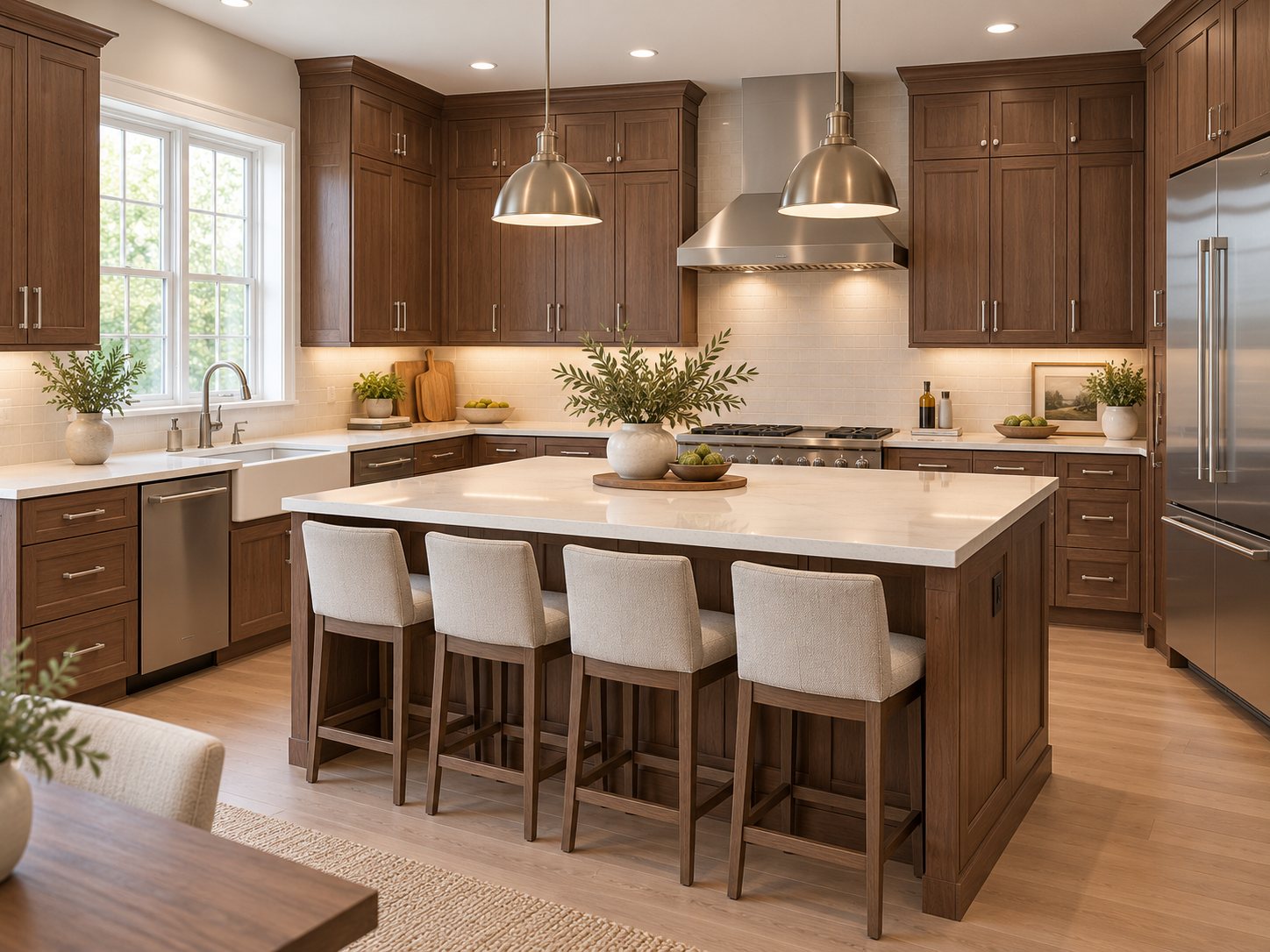
G5 Chestnut Oak kitchen design inspiration with warm cabinetry and light countertops.
Replacing kitchen cabinets does not always mean replacing the woodwork around them. A Richmond renovation may retain stained door casings, a staircase, ceiling beams or built-in shelving that remains visible from the kitchen. Selecting the new cabinetry with those details in mind helps the finished project feel connected.
For contractors and designers sourcing kitchen cabinets in Richmond, VA, the useful question is how the new finish relates to what will stay. A close match can work, but deliberate contrast can also create a cohesive room. Start with the existing woodwork, then compare cabinet samples before committing to the full material package.
Identify the woodwork that affects the kitchen
Walk through the kitchen and the spaces visible from it. Note which stained surfaces will remain and which will be refinished or replaced. A large staircase in the adjoining room may influence the selection more than a small piece of trim inside the kitchen.
For a remodel in the Fan District, Museum District or elsewhere in Central Virginia, document retained architectural details early. This keeps the cabinet decision tied to the actual scope of work. Include photographs, but arrange an on-site sample review when the finish relationship matters.
Compare undertone before trying to match depth
Two brown finishes can have similar darkness and still look different together. One may lean golden, another reddish, and another more muted. Compare the cabinet sample directly beside the retained trim to see whether the relationship feels harmonious.
Avoid promising an exact match to aged woodwork based on a digital image or a small color chip. Existing finishes may vary across the house, and natural wood can show variation within the same piece. Ask the client to approve the relationship between the materials rather than an assumed identical color.
Choose a close relationship or a clear contrast
A near match is most useful when the cabinetry should blend with substantial existing woodwork. Review a full door sample so the client can see the finish across a larger area. If the match feels uncertain, consider a distinct contrast instead of selecting a finish that is almost the same.
For example, a medium warm cabinet finish can sit comfortably beside darker retained trim when light walls and countertops give each surface space. The result depends on the particular samples and room lighting, so treat this as a design option to test. Avoid introducing several additional wood colors before the main relationship is settled.
Use G5 Chestnut Oak to explore a warm cabinet direction
The G5 Chestnut Oak kitchen design shown above shows warm cabinetry paired with light countertops and a matching island. It is a useful reference for discussing a kitchen where the cabinets provide the main wood finish and lighter surfaces balance the room.
The Chestnut Oak product name identifies a finish; it should not be used to infer that every cabinet component is solid oak. Confirm the current materials and door specification with L&C Cabinetry. Also ask the Richmond/Ashland team about current G5 availability and ordering timelines before building it into the project schedule.
Compare G-Series cabinet finishes · Browse cabinet collections
Create a finish board for the actual room
Bring the cabinet sample, countertop, backsplash, wall paint and hardware together beside the retained woodwork. View them under daylight and the proposed kitchen lighting. Keep cabinet samples vertical and countertop samples horizontal to better represent their installed positions.
Choose quieter surrounding surfaces if the existing trim and cabinet grain already create substantial visual detail. A simple backsplash can make that relationship easier to read. If the client wants a patterned countertop, compare its full pattern or a representative larger sample before approving it alongside the wood finishes.
Include visible panels and trim in the order review
Finish coordination extends beyond the doors. Review island ends, exposed cabinet sides, fillers, crown and any transitions to existing molding. Identify where a finished panel is needed and confirm that each visible component appears in the cabinet quote.
A useful approval checklist includes:
Retained woodwork and its condition are documented.
Cabinet finish and door profile have been approved together.
Countertop, backsplash and wall paint have been compared on site.
Visible panels and cabinet trim are included in the order.
Supplier availability and lead time have been confirmed.
Keep the approved sample reference with the project records so later material substitutions can be reviewed against the original decision.
Questions about mixing wood finishes
Do the kitchen cabinets have to match every wood surface?
No. Select a clear relationship between the major finishes, then repeat selected tones or materials where that supports the design. Every surface does not need to be identical.
Should existing trim be refinished before choosing cabinets?
If refinishing is part of the scope, approve a representative refinished sample before finalizing the cabinetry. Otherwise, select against the trim in its retained condition.
Discuss your Richmond cabinet finish plan
L&C Cabinetry works with trade professionals serving Richmond and Central Virginia. Contact the Richmond/Ashland team to review cabinet options, request wholesale project pricing and confirm the finish and availability for your proposed order.
L&C Cabinetry Richmond and Ashland
10387 Lakeridge Pkwy, STE 102, Ashland, VA 23005
(804) 368-6967
Contact the team
Home Remodeling in Richmond, VA: 6 Spaces Where Cabinetry Can Transform the Project
Home remodeling in Richmond, VA often starts with a kitchen or bathroom, but many whole-home projects involve a much broader question: how can the house…
Read article
Kitchen Remodeling in Richmond, VA: A Cabinet Planning Guide for Better Projects
Kitchen remodeling in Richmond, VA often begins with a design goal: more storage, a better work triangle, a larger island, a brighter finish, or a layout…
Read article
Custom vs. RTA Kitchen Cabinets in Richmond, VA: Which Is Right for Your Project?
When planning a kitchen renovation, new construction project, or investment property, one of the biggest decisions is what type of cabinetry to…
Read article